the kick that built house
dial in the actual voices — analog circuit models, not samples — and hear why this exact machine sounds like it does.
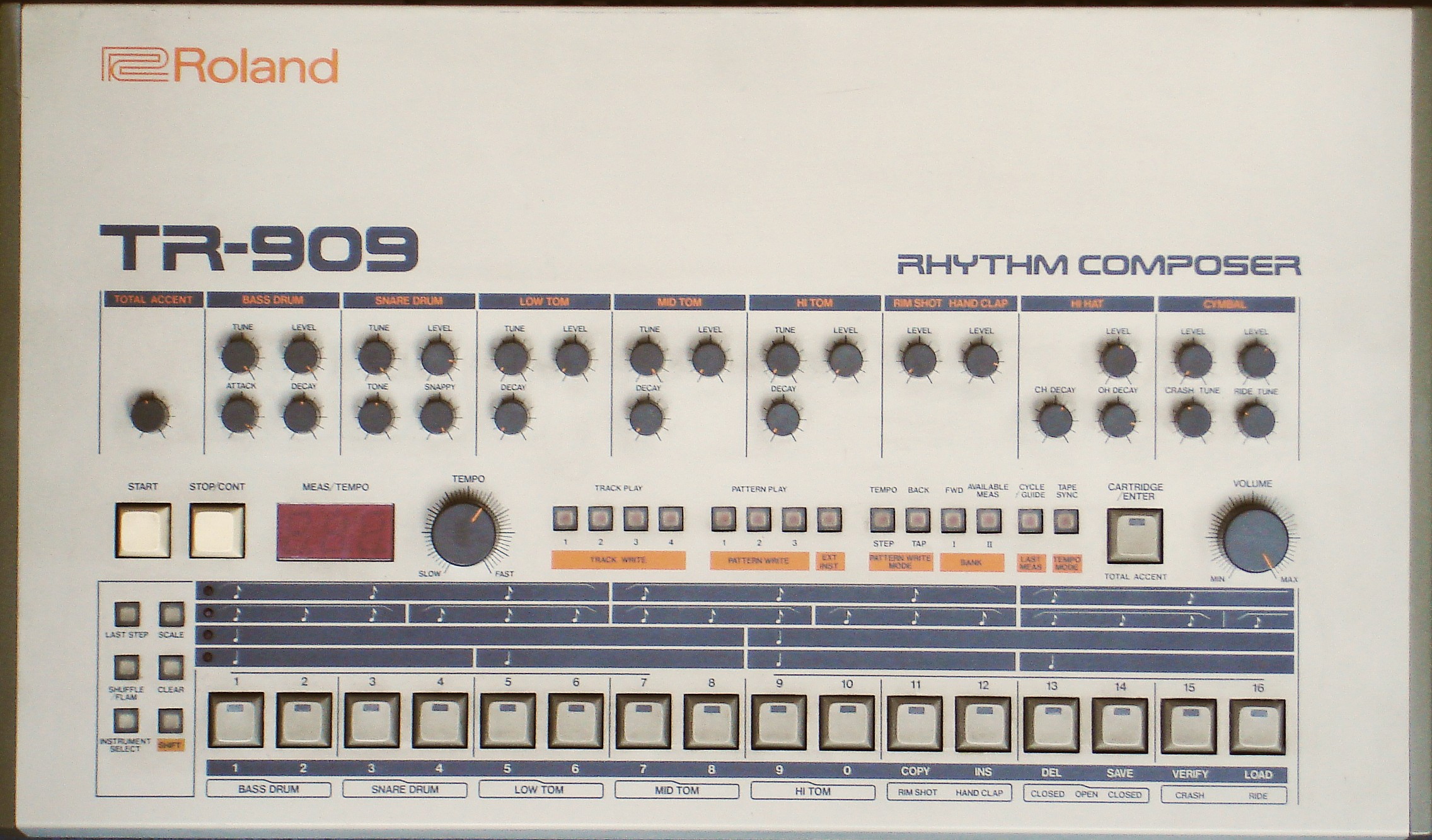
why this machine sounds like this
roland built the 909 trying to make a better 808 — they wanted realistic drums. they put real sampled cymbals on it (the hats, the crash, the ride) and modeled the kicks/snares/toms with analog circuits. but the analog parts were a compromise: cheaper opamp circuits, faster envelopes, brighter than the 808. compared to a real drummer they sounded fake. compared to anything else that existed, they sounded like the future.
in chicago, frankie knuckles, ron hardy, larry heard, and a generation of dj-producers were looking for a sound that wasn't disco. cheap 909s from failed studios let them program their own. the 4-on-the-floor kick became the foundation. the offbeat open hat became the engine. that's house music.
in detroit, juan atkins, derrick may, and kevin saunderson were doing something related but different — same machine, more syncopation, more sci-fi, more kraftwerk in the dna. the same 909 became techno. one box, two cities, two genres, both born within a year of each other.
what to do in this room: play with the kick first. tune up and down — hear it go from sub to tom to a high pop. then move to the open hat, lengthen its decay until it's holding 16th notes between the kicks. you just rebuilt the house music drum line from scratch.
the people on the machine
the 909 flopped on release. roland made about 10,000 units in 18 months and shut down production. then chicago kids found them in pawn shops and built a genre.
go listen
the 909 kick at its most patient. that warm thud sitting under heard's deep house pads — the foundation. listen to how little else is going on.
detroit's answer. tighter kick, more attack. listen for the syncopated kick pattern that pushes the track forward — that's the detroit thing.
the 909 here is just keeping time. the lesson: even when it's not the star, the machine is the floor. (the star is a 303 going feral on top.)
put it in your hands
the 909 kick + clap + hat live in two practice rooms — paris (french house / Daft Punk) and berlin (techno). same machine, real beat. drum a four-on-the-floor at 124 BPM and you'll hear exactly why this circuit built half of dance music.
next on the punch list
- · export pattern to WAV (then to ableton .als + move kit)
- · per-pattern memory — save your own patterns alongside the presets
- · web MIDI out → trigger your move / TE rig from the browser
- · accent / shuffle / flam controls per voice (the real 909 had them)
- · lesson progression: 5 guided steps from kick → full pattern, unlocking as you go
- · demonstrate mode: type "phuture acid kick" → the app dials the patch and explains what it did